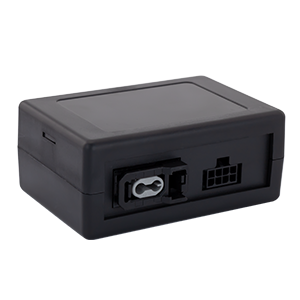
Axis 2400 Video Server ✭
While the Axis 2400 was once the "world’s best-selling video server," it has since been superseded by more advanced models like the and the Axis 241Q . Modern replacements offer H.264/H.265 compression, higher resolutions, and improved cybersecurity features. However, many Axis 2400 units remain in service today due to their robust build and the ongoing need to integrate legacy analog hardware into digital environments. AXIS 2400 Video Server Administration Manual
The device is built on Axis' proprietary ThinServer technology , featuring a 32-bit RISC ETRAX 100 processor and a dedicated ARTPEC-1 compression chip.
The server supports motion detection and can be programmed to automatically upload images to an FTP server or send email notifications upon an alarm trigger. Axis 2400 Video Server
The primary purpose of the Axis 2400 is to act as a bridge between old and new technologies. It converts analog video signals from up to four cameras into high-quality digital streams using Motion JPEG (MJPEG) compression.
Unlike single-channel units, the Axis 2400 can handle four simultaneous video streams, which it delivers at a frame rate of up to 30 frames per second (NTSC) or 25 fps (PAL). While the Axis 2400 was once the "world’s
For professionals maintaining legacy systems, the technical datasheet highlights the following key parameters: Specification 4 BNC composite ports (auto-sensing PAL/NTSC) Resolution Up to 704 x 576 (PAL) or 704 x 480 (NTSC) Network Interface 10Base-T/100Base-TX Fast Ethernet (RJ-45) I/O Ports 4 alarm inputs, 1 output relay for external triggers Internal Memory 16MB RAM, 2MB Flash, 8MB pre/post alarm buffer Supported Protocols TCP/IP, HTTP, FTP, SMTP, NTP, ARP, BOOTP Key Benefits for Security Systems
Users could configure and monitor the device from anywhere in the world via the Administration Manual interface. AXIS 2400 Video Server Administration Manual The device
The Axis 2400 was marketed as a "Plug and Watch" solution. Its major advantages included:
It extended the life of expensive analog cameras while removing the need for dedicated coaxial cabling to a central monitor.
The is a pioneering 4-channel video encoder that played a critical role in the global transition from traditional analog CCTV to modern IP-based surveillance. Introduced by Axis Communications in the early 2000s, it allowed organizations to digitize their existing analog camera feeds, enabling remote monitoring over any TCP/IP network or the Internet. Core Functionality and Architecture